
Key Takeaways
- Website loading speed is a key Google ranking factor that directly affects search rankings and user behavior metrics.
- Core Web Vitals assess user experience quality through LCP, CLS, and INP metrics, which are critical for commercial sites.
- Slow loading leads to higher bounce rates, lower time on site, and decreased conversions — especially noticeable on mobile devices.
- A CDN (Content Delivery Network) is a network of servers that speeds up website loading by distributing content closer to users and reducing the load on the origin server.
- Besides speed, CDNs provide protection against DDoS attacks, stabilize performance during traffic spikes, and improve global availability.
- Speed optimization involves multiple measures: from image compression and code minimization to using a CDN and reliable hosting.
- Fast loading improves SEO and sales by enhancing user experience and audience retention, which is especially important for e-commerce, SaaS, and booking services.
Website loading speed today directly influences both user experience and SEO promotion. Google factors page performance into rankings using Core Web Vitals metrics, so slow-loading sites often drop in search results, experience higher bounce rates, and convert traffic into leads and sales less effectively. This is especially crucial for commercial projects where just a few extra seconds of load time can reduce conversions and increase customer acquisition costs.
One of the most effective ways to speed up a website is a CDN — a technology that helps deliver content to users faster and improve speed metrics. Let’s explore how a CDN impacts SEO, why speed has become an important Google ranking factor, and how performance optimization helps businesses increase conversions.
Why Website loading speed matters for SEO
A few years ago, SEO website promotion primarily focused on content, backlink profiles, and technical optimization. Today, Google’s algorithms evaluate not only the relevance of a page but also how user-friendly the site is. That’s why loading speed has become a significant ranking factor, especially after Google’s shift to mobile-first indexing. If a site loads slowly on smartphones, it can negatively affect both search rankings and behavioral metrics.
Currently, Google uses Core Web Vitals to measure user experience, specifically:
- how quickly the main content loads;
- whether the page displays stably;
- how fast the site responds to user interactions.
Slow loading increases bounce rates — users leave the page and return to search results. For Google, this signals the site doesn’t meet user expectations. Conversely, fast sites keep users engaged longer, have better interaction rates, and rank higher in search results. Thus, website speed and SEO are now closely linked: enhancing performance simultaneously boosts visibility and organic traffic effectiveness.
What are Core Web Vitals
Google identified a set of key metrics — Core Web Vitals — to evaluate user experience. These specific indicators show the quality and speed of user interaction with a site:
- LCP (Largest Contentful Paint) — the time it takes to load the largest, most significant content element on the page, such as a heading or image;
- CLS (Cumulative Layout Shift) — measures visual stability, i.e., how much elements shift («jump») during page load;
- INP (Interaction to Next Paint) — the responsiveness of the interface to user actions like clicks, scrolling, or input.
Google introduced these metrics to assess not just loading speed but also the quality and comfort of user interactions. They are especially important for online stores and commercial projects, where delays harm customer experience and lead to lost sales.
How slow loading affects user behavior
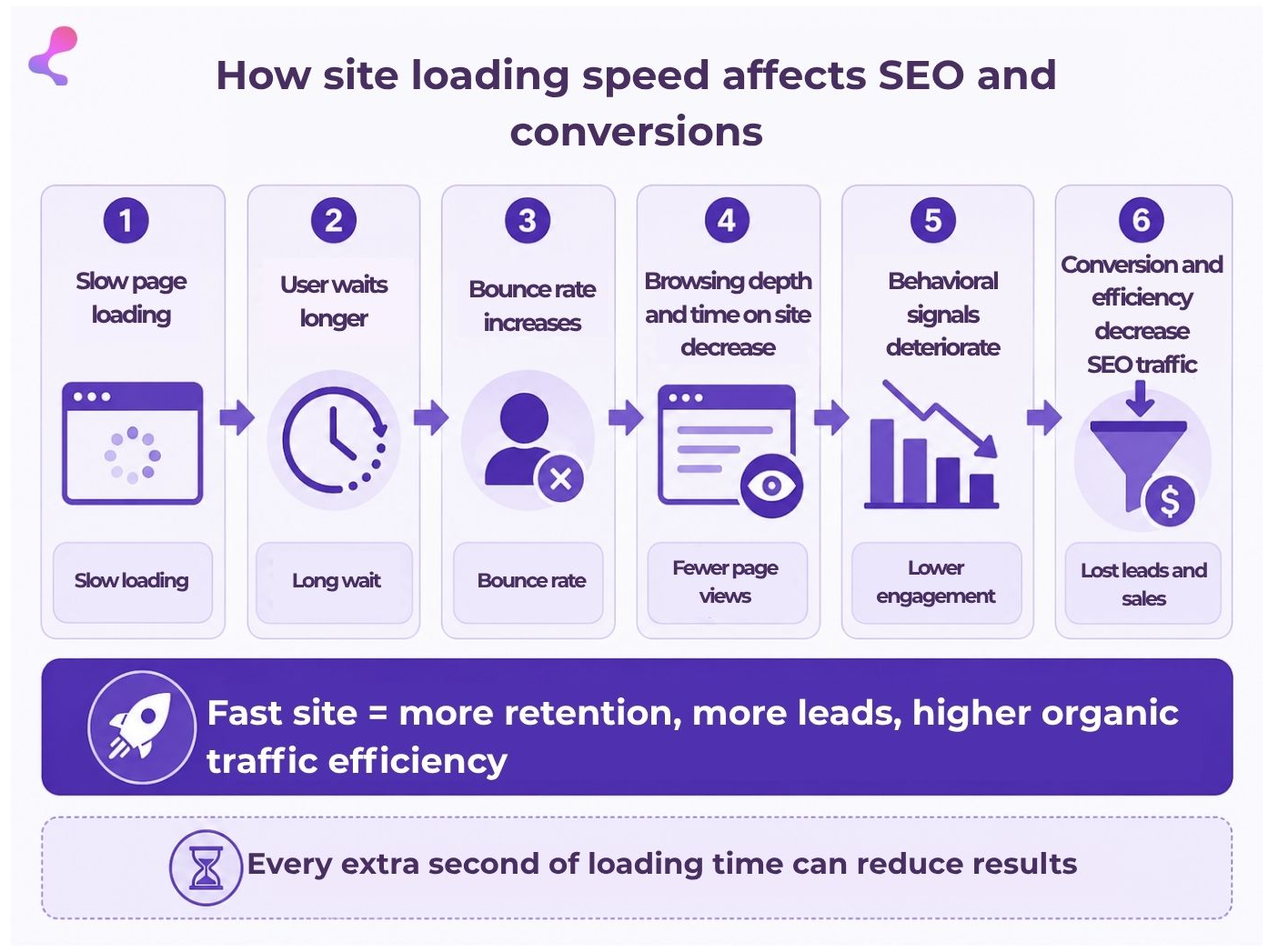
The longer a page takes to load, the higher the chance visitors will leave — directly impacting business:
- Bounce rate increase. From our observations, increasing load time from 1 to 4 seconds can raise the bounce rate by 50% or more.
- Decreased page depth. Slow-loading pages lead to less content viewed per visit, reducing engagement and conversions.
- Lower conversions. For e-commerce, every additional second of load time can reduce conversion by 7-12%. For SaaS and booking services, this results in fewer new signups and clients.
- Reduced time on site. Users are unwilling to wait and often turn to competitors instead.
What is a CDN and how It speeds up your site
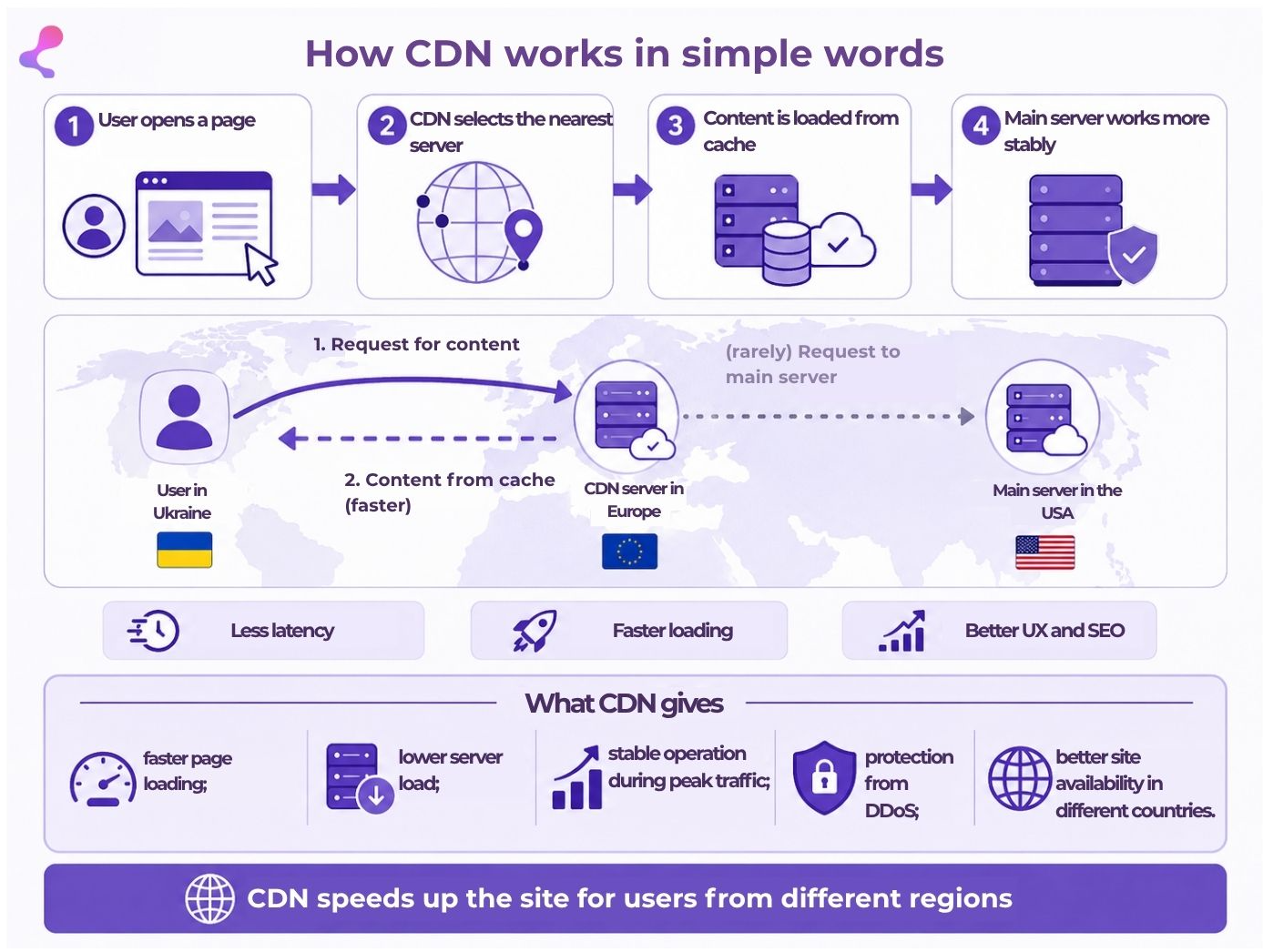
A CDN (Content Delivery Network) is a network of servers in various countries and regions that helps users load a website faster. Instead of fetching data every time from the main server, content partially loads through the server node closest to the user. This reduces latency and speeds up page loading significantly.
For example, if a website’s server is located in the USA but a user accesses it from Ukraine, the request must travel a long distance, increasing load times — especially for images, videos, and other heavy elements. A CDN stores some content on servers near the user, so the site loads faster regardless of geographic location.
This is particularly important for SEO, as Google considers loading speed and user experience in its rankings. Faster pages lead to lower bounce rates and increase the probability users will stay and complete desired actions.
How a CDN works in simple terms
- A user opens a webpage.
- The CDN automatically detects which of its servers is closest to the user.
- Cached content — images, CSS, JavaScript, videos — is delivered from the selected node.
- The main server experiences less load, as part of the traffic is served by CDN nodes.
For instance, if a visitor from Kyiv opens a site hosted on a US server, the CDN may serve most content via a European server, reducing response times and accelerating page load.
The impact is especially noticeable on mobile devices, where internet speeds are often lower and users are less tolerant of delays. Additionally, CDNs improve caching efficiency, making repeat visits even faster.
CDN benefits beyond speed
While CDN’s primary purpose is to accelerate loading, it also provides:
- Protection against DDoS attacks. The distributed network complicates server overload by malicious traffic.
- Reduced load on the origin server, enhancing reliability and uptime.
- Improved mobile site performance by optimizing content delivery and reducing latency, important for mobile networks.
- Global availability, so users worldwide experience consistently fast loading — vital for international projects.
How website speed affects conversions and sales
Website loading speed directly impacts not only SEO but also business metrics. Modern users expect pages to load almost instantly, especially on mobile devices. If a site loads too slowly, users close the tab and move to a competitor before they even see the offer or product.
Every extra second of loading time can decrease conversions, increase bounce rates, and reduce audience engagement. This is crucial for commercial projects where speed directly influences lead generation and sales. Slow-loading catalogs or checkout pages in e-commerce cause some users to abandon purchases. In SaaS, delays spoil first impressions; for booking websites or B2B projects, slow pages result in fewer inquiries and submissions.
Mobile users are particularly sensitive to speed. Mobile internet is often unstable, so even small delays noticeably degrade the user experience. This is why Google prioritizes mobile-first indexing and factors mobile site performance into rankings.
Fast websites not only retain users better but also increase SEO traffic effectiveness. When pages load quickly, visitors explore more sections, stay longer, and are likelier to take desired actions. This leads to more conversions without increasing advertising costs.
How to check website speed
Regular assessment of site speed is essential since performance directly affects Core Web Vitals, user experience, and SEO metrics. Several convenient tools help evaluate loading speed, identify technical issues, and pinpoint elements slowing the site. The main and most effective tools include:
- Google PageSpeed Insights — a primary tool analyzing site speed, showing performance scores for mobile and desktop, plus recommendations for improving Core Web Vitals and load speed.
- Lighthouse — Google’s technical audit tool for performance, accessibility, and SEO quality analysis.
- GTmetrix — detailed page load analysis showing which images, scripts, or CSS slow down the site.
- WebPageTest — advanced speed testing from various countries, browsers, and devices, useful for international projects.
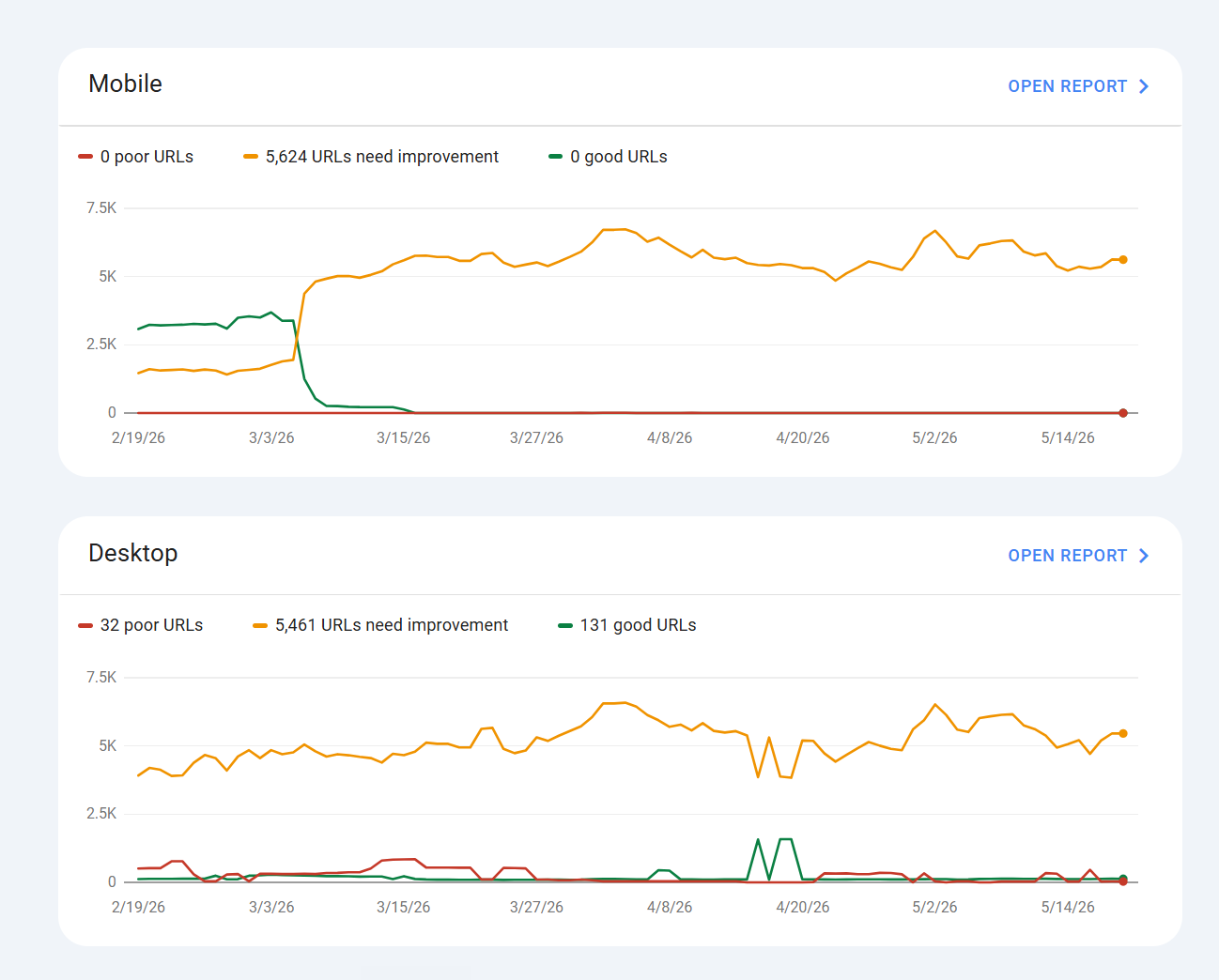
- Google Search Console — Core Web Vitals report with real user data on page performance and URLs needing optimization.
Most important metrics to monitor
When checking site speed, analyze not only the general tool score but also specific metrics affecting user experience and SEO:
- LCP (Largest Contentful Paint) — shows how fast the main visible content loads; Google recommends keeping it under 2.5 seconds.
- INP (Interaction to Next Paint) — measures site responsiveness to user actions; faster responses mean a better experience.
- CLS (Cumulative Layout Shift) — indicates visual stability. If page elements shift during loading, it worsens user perception and can cause accidental clicks.
- TTFB (Time to First Byte) — shows how quickly the server starts sending data after a request; a high value often signals hosting, server, or CDN issues.
Regular monitoring helps maintain high site speed, improve Core Web Vitals, and keep stable SEO rankings.
Why CDN is no longer optional but erssential
Today, website speed directly influences SEO, user experience, and business effectiveness. Google increasingly assesses site interaction quality via Core Web Vitals, so slow loading can lower search rankings, worsen behavioral metrics, and reduce conversions. That’s why modern SEO cannot be considered separately from site performance and UX.
CDNs accelerate page loading, improve Core Web Vitals, and make sites more stable for users worldwide. Consequently, fast sites gain SEO advantages: users stay longer, convert more, and bounce less. This is particularly important for mobile traffic, e-commerce, SaaS platforms, and other commercial projects where every second counts toward revenue.
Therefore, today CDNs are not just a technical upgrade but a vital SEO and conversion growth tool. To improve your site’s search rankings and maximize organic traffic efficiency, regularly check loading speed, analyze Core Web Vitals, and test speed optimization solutions, including CDN integration.


